What is Shamanism?
As I prepare to share stories from the sacred pilgrimages I have taken over the past ten years, I realized there are a few foundational concepts that may be helpful to introduce first. Words like shamanism and pilgrimage are familiar to some readers, while others may be encountering them for the very first time. Before we set off together, I'd like to offer a little context.
Author of Powering Up Our Life Stories and We Are Children of the Evolution, Andrew Steed follows and teaches a Celtic shamanic pathway. Over the past decade, I have had the privilege of studying with Andrew, participating in multiple pilgrimages, and completing both his two-year Celtic Shamanic Practitioner program and an additional two years of advanced shamanic studies. Naturally, one of the questions I am often asked is, "What exactly is shamanism?"
Like many spiritual traditions, the answer depends on who you ask.
In We Are Children of the Evolution, Andrew writes:
"Like all labels, defining what I do in the world by using one can get lost in translation. Shamanism is a term that may sound strange to some readers while being very familiar to others. For me, shamanism is simply a term I use for those who are connected to working with the wellbeing of the Earth to benefit all sentient beings. Someone who lives a shamanic lifestyle and teaches others has a huge responsibility as a guardian of the planet. They have the ability to walk between the worlds, to connect with the ancestors and with unseen beings; they are medicine people. And there are many amongst this tribe of beings who can see the tapestry of life clearly, others who, like myself, dedicate their lives in service for the highest good of all beings."
I appreciate Andrew's perspective because it reminds us that shamanism is less about adopting a label and more about living in relationship—with the Earth, with Spirit, with our ancestors, with one another, and with ourselves. While each indigenous tradition has its own unique teachings and practices, many earth-centered traditions share common values rooted in respect, reciprocity, and service.
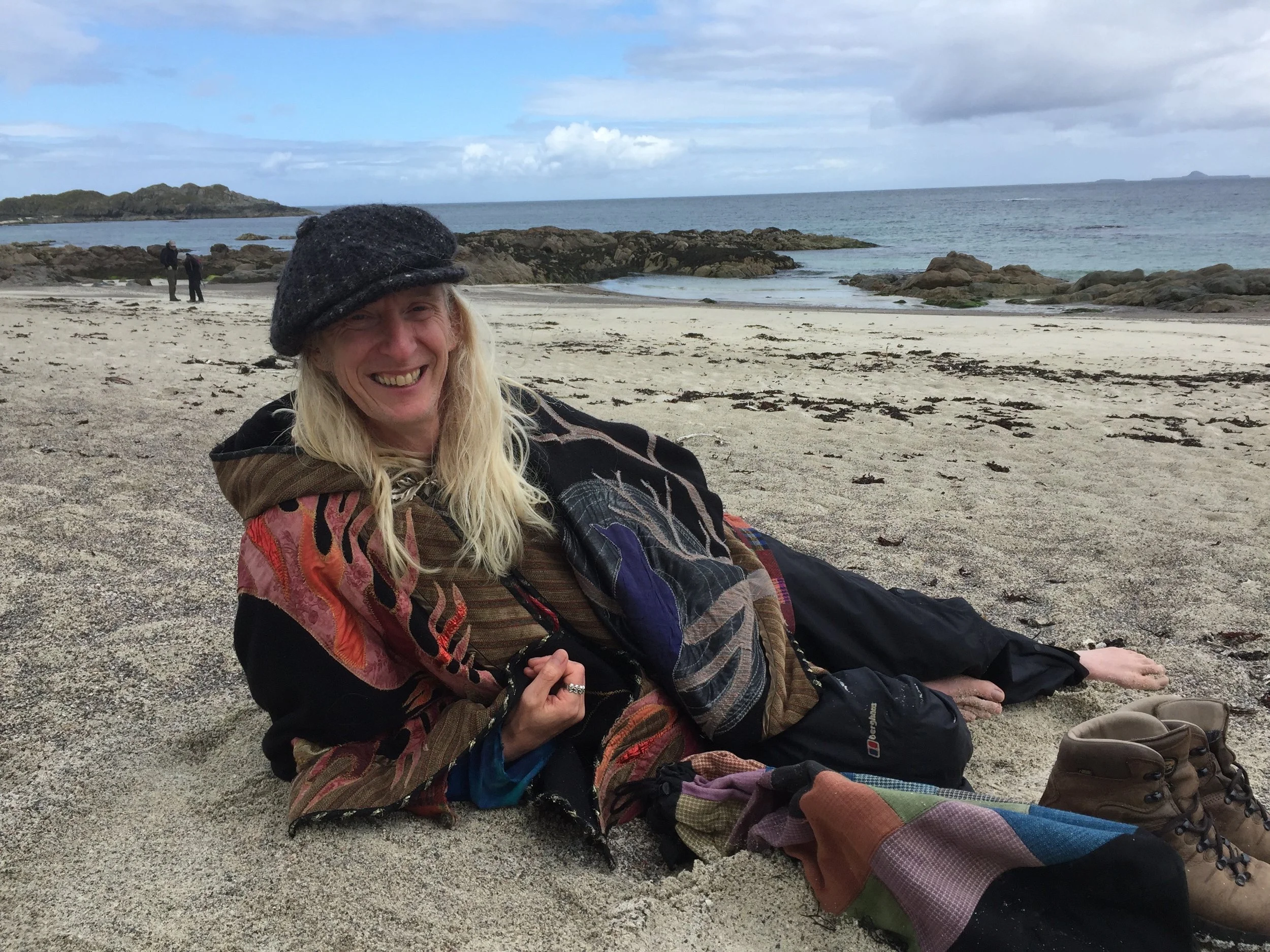
Andrew Steed | Isle of Iona | July, 2016
I took the accompanying photograph on the north beach of the Isle of Iona in 2016 during my very first pilgrimage with Andrew. If you study with him, you can almost guarantee you'll spend most of your time outdoors—rain or shine! This image was taken following one of our teachings on the beach. Andrew is a gifted storyteller, and storytelling has long been one of the primary ways wisdom, history, and cultural traditions have been carried from one generation to the next.
Although the word shaman originates with the Tungus people of Siberia, anthropologists later adopted the term more broadly to describe spiritual and ceremonial leaders found among many indigenous cultures throughout the world. While every tradition is unique, many share common themes, including:
A deep connection with nature
Healing of self and community
A commitment to spiritual practice
Pilgrimage to sacred places
Vision, ceremony, and honoring the unseen
These principles invite us into a way of living that recognizes our relationship with the Earth, with one another, and with the greater web of life. Shamanic practice reminds us that healing begins within ourselves but naturally extends outward into our families, our communities, and the living world around us. It encourages us to cultivate a regular spiritual practice, seek balance within our physical, mental, emotional, and spiritual lives, and spend time in nature listening as much as speaking. Pilgrimage becomes a way of intentionally stepping away from everyday routines to encounter places that have long been recognized as sacred, while ceremony offers opportunities to honor our ancestors, express gratitude, and deepen our relationship with Spirit.
One of the aspects I appreciate most about the Celtic shamanic tradition is that these principles are not reserved for extraordinary moments—they become a way of life. Spending time in nature, honoring our ancestors, tending our own healing, serving our communities, and developing a consistent spiritual practice all become part of everyday living. The invitation is not to escape the world, but to become more fully present within it.
One of the most meaningful expressions of the Celtic shamanic path is pilgrimage. Unlike a vacation, a pilgrimage is an intentional journey undertaken for personal, spiritual, or cultural growth. While beautiful landscapes and historic sites are certainly part of the experience, the true destination is often an inner one. Pilgrimage invites us to slow down, listen deeply, connect with the land, and become more present to ourselves and the people traveling alongside us. As Andrew often reminds us, the land has much to teach when we take the time to truly meet it.
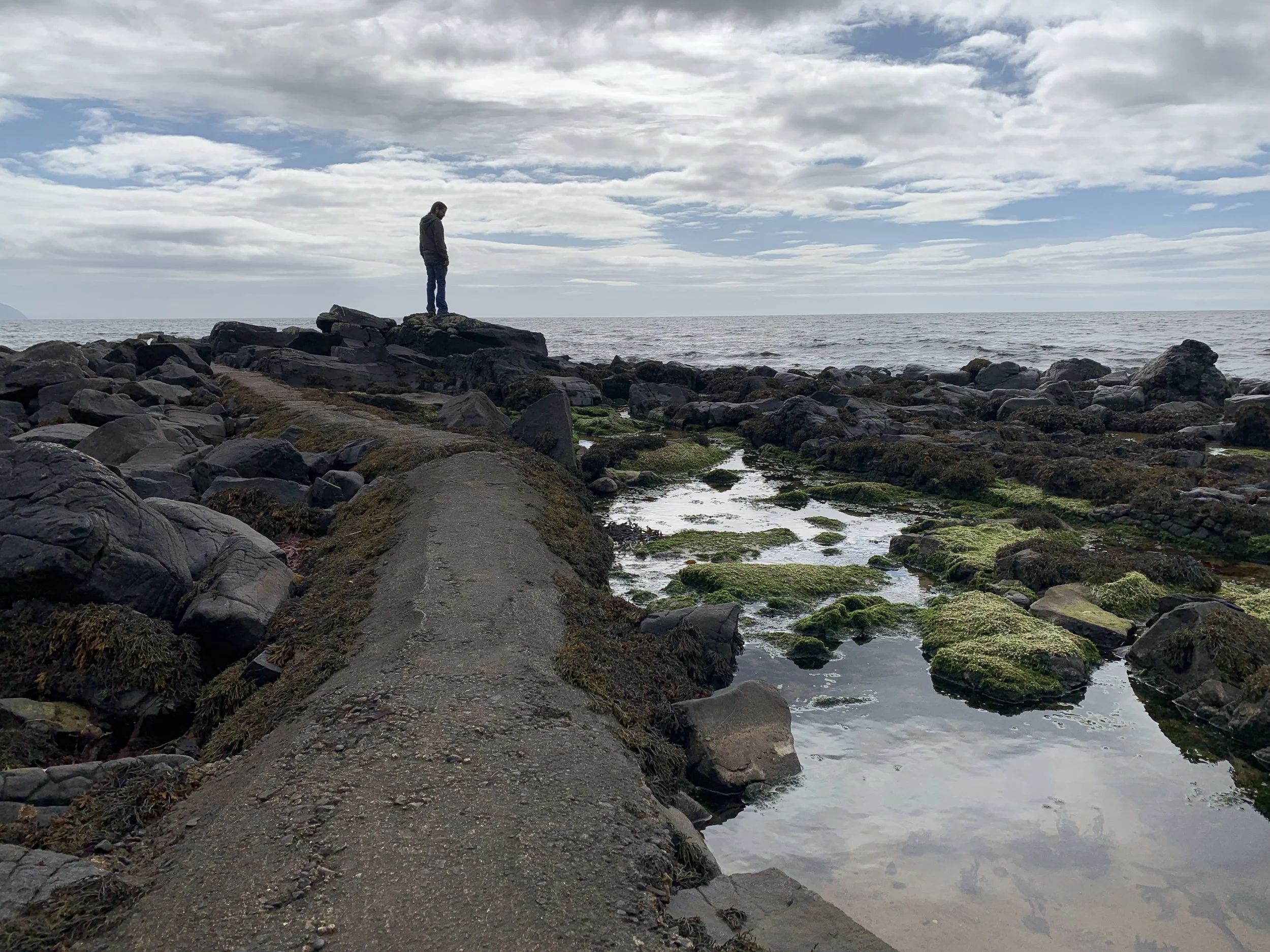
Brandon Redhawk | Isle of Arran | September, 2019
Over the coming weeks, as we count down to Andrew's visit to Spokane this September, I'll be sharing stories from the many pilgrimages I have taken with him throughout the British Isles, United States, Canada, and Jamaica. These are not simply travel stories; they are reflections on friendship, transformation, laughter, challenge, and learning to see the world through new eyes. Each experience has shaped my spiritual journey in profound and lasting ways, and I look forward to sharing some of the lessons from the land that I've learned along the way!
With gratitude,
Jenna